Holiness at Eye Level (More on My Celtic Pilgrimage)
I try not to pay too much attention to my fitness watch. Still, it does remind me to pick up the pace while running, and I’ve heard often enough about the benefits of getting in a few thousand steps a day that I appreciate the accountability.
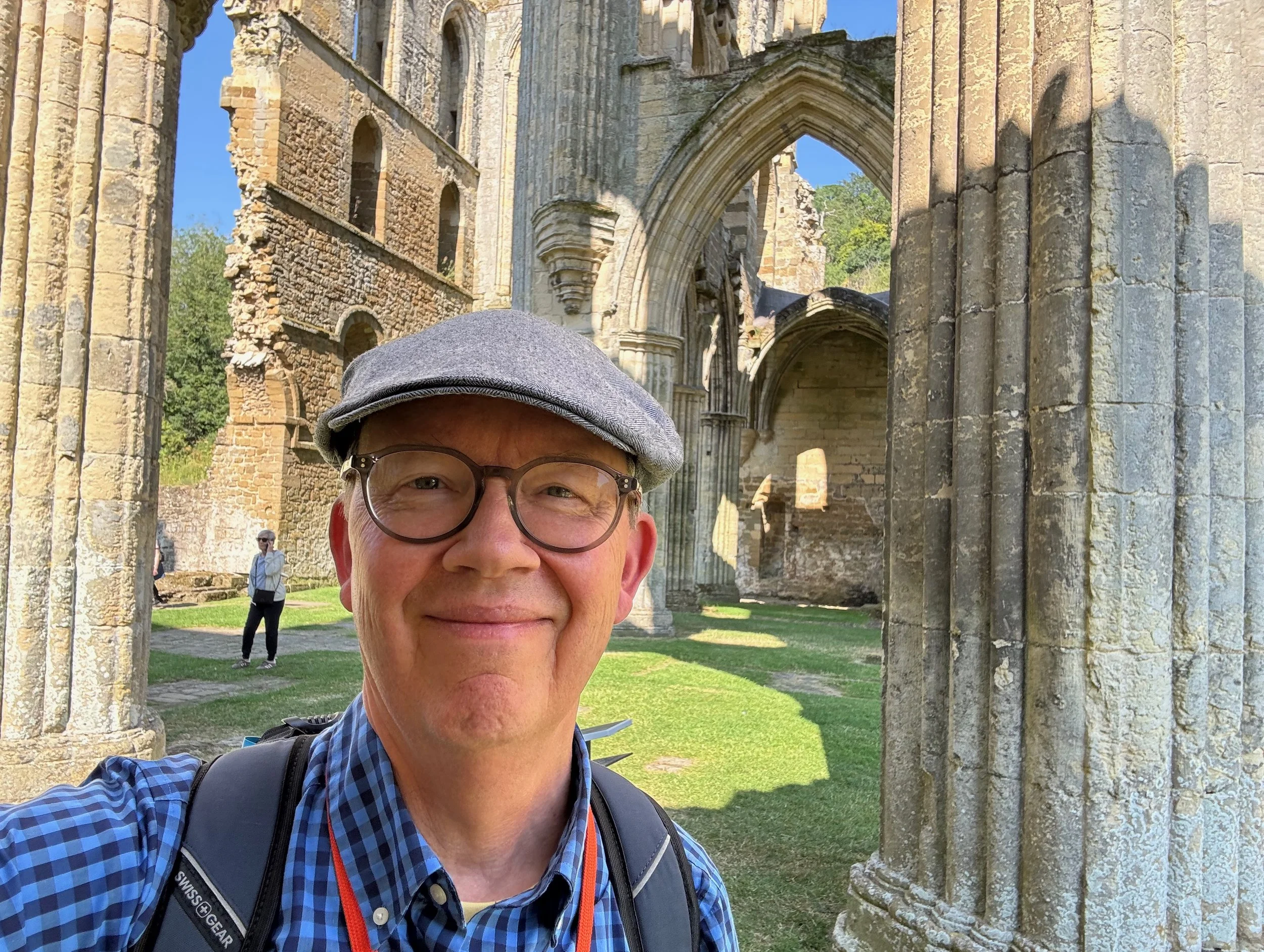
I broke my walking record in July when Jill and I took a summer Celtic pilgrimage. Ancient holy sites in Scotland and England were on the itinerary—Lindisfarne, also known as Holy Island; Jarrow; Iona; Whitby. Of course there was a lot of walking, and one day I clocked 14,000 steps.
But walking has deeper meanings than steps counted. Walking can be a means of going deeper in your life, more reflective in your faith. A way to practice holiness.
There was a lot of walking back then if you were a Scottish or Irish saint. While some of the heroes of Celtic Christianity lived secluded lives in monasteries and convents, if you were a Columba or Cuthbert or Hilda or Aidan, you were on your feet a lot. You traveled. You moved among people. You did things at ground level, entering conversations face-to-face.
That became especially vivid to me during our pilgrimage.
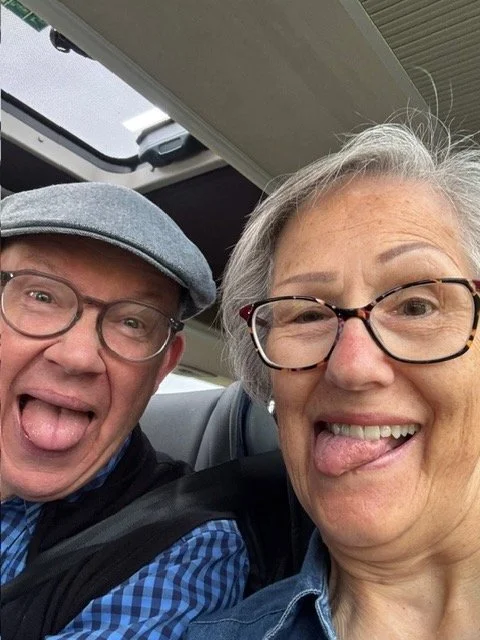
On one leg of the trip, we traveled three hours by bus. The roads grew narrower and narrower, down to one lane for the last hour. Then we took a ferry to the Isle of Mull, followed by another, quicker ferry ride to Iona. By that point, as the picture below shows, Jill and I were getting a little nutty from being too long on the bus.
But what took us mere hours would have taken the early Celtic saints days.
Thinking about the way faith spread through these ancient lands, I said to our tour co-leader, Bishop Greg Rickel, who was sitting in the bus seat ahead of me, “The early saints traveled a lot, didn’t they? I assume it was all on foot.”
Yes, he said. They walked—and walked.
Well, they did sometimes get in a boat. A currach was a wooden frame over which they stretched cow hides to keep the craft light and tight and afloat. But for these saints, it was mostly foot traffic where you practiced your faith. For walking allowed something more than simply getting from one place to another.
“There is something sacred in . . . choosing to love the world at the speed of walking,” writes Debra Dean Murphy. You notice more on foot.
And we saw panoramic beauty on the trip, by the way. The outlines of ruined monasteries that let a blue sky’s scudding clouds peak through. Staffa Island offered a sight not everyone sees—not even everyone who makes the boat trip to that isolated island. It was a hike up a hill to be sure, but then, all of a sudden, you see (at least we did) puffins proliferating there, remarkably unafraid of humans.
But I was most struck by the stories we heard and tried, in some small way, to relive in our imaginations—many stories of which had to do with roads and byways. Some paths were obvious and deeply and permanently worn down to soil. Others required courage or dogged determination, for the Celtic saints also suffered for their faith—even died.
Holiness at Eye-Level
I put the finishing touches on this essay on St. Aidan’s special day of commemoration (August 31—the day of his death in 651). Aidan was originally a monk at the monastery on the Island of Iona, founded by St Columba, one of our first stops. He went on to found and preside over the Lindisfarne island monastery in England. He spread Christianity to and throughout Northumbria.
And I love the story I heard more than once on our trip.
How King Oswin gave Bishop Aidan a horse decked out with finery. He felt that the bishop should ride to the far-flung parts of his diocese instead of walking, especially when Aidan’s health faltered.
One day Aidan, presumably atop the horse, met a beggar who asked for help. Aidan dismounted and gave the horse and all the trappings to the man.
Later, finding out what happened, the king chided Aidan—he had other, less valuable horses that the bishop could give to the poor.
Aidan’s response: “Is the child of a mare more valuable to you than this child of God?”
Walking slows us down enough to notice where we are and who we are around and what we might do.
Perhaps that was part of what made the walking of these saints so significant. They did not simply go. They had more to do than be a tourist in strange places. As they passed through villages and fields, they encountered strangers, people in need, the doubting person desperate to be reassured, the growing fellowships needing direction. They lived among those they served, making any simple path they trod holy ground. Their journeys were measured not in steps but in villages visited, lives helped, people invited to turn to Christ.
And maybe that is one reason walking can still be more than exercise. A walk can become a way of paying attention—to creation’s wonders, to other people, to God, and even to the paths that wise and kind people have walked before us.
Now, back home, unpacked and fitting back into my routines, I still think about those saints, doing good, sharing good news. How they met the vulnerabilities of people they met with urgency and kindness and conviction. And when I go for a walk in my neighborhood or in some new place, maybe I can pray with greater longing for the steps God will open in the days ahead, the people I’ll encounter. When I consider the larger course of my life, perhaps I can enter more willingly into its ordinary scenes, attentive to what God might want to accomplish—and to the places he might lead me, if I am willing to follow.
Great quote from Debra Dean Murphy: “In many religious traditions, pilgrimage is a form of walking that holds together the spiritual and the material, the journey and the arrival. Historically, pilgrims were not physically fit but often frail, walking great distances to reach healing wells and holy relics that would confer a blessing and restore well-being. … We are all of us fellow pilgrims on this journey, bearing unseen burdens, looking for healing and holiness, even if we cannot fully name that longing.”