No 'Shy' Member of the Trinity (One Thing Eugene Peterson Missed)
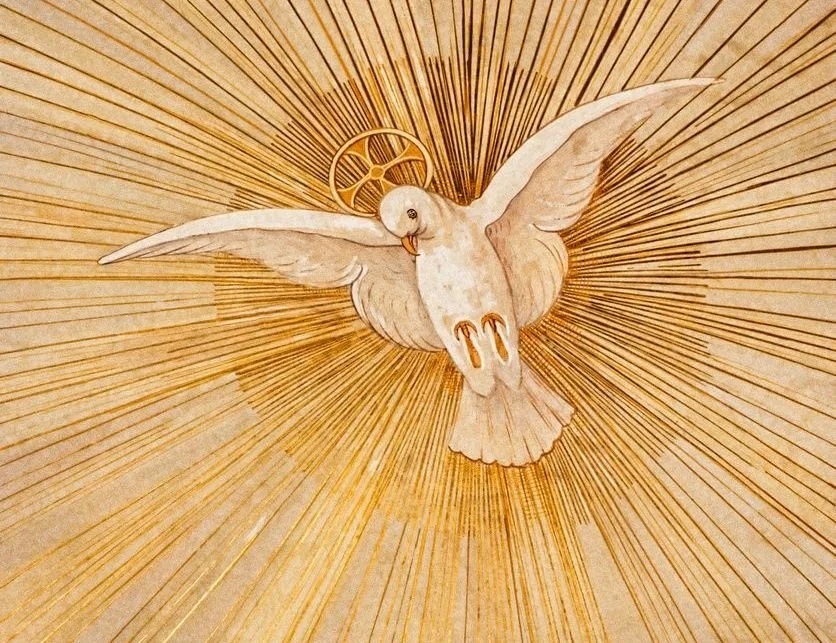
A few Sundays ago, teaching on the love of God we see in the Father, Son, and Holy Spirit, I pushed back against the notion that the Spirit is the “shy” member of the Trinity.
Only yesterday did I realize one place where I may have heard the idea: Leafing through one of Eugene Peterson’s many books on my shelf, there it was. (Eugene was himself quoting a New Testament scholar.) Reading Eugene’s explanation didn’t change my mind, as I’ll explain.
And let me be clear: The late translator of The Message, the beloved author, and the renowned pastor-professor could run writing laps around me. When profiling him for Christianity Today, I visited him and his wife in his Montana cabin; I still can recall not only the pristine lakeside mountain air but their storied hospitality. Peterson modeled an impressive holiness. He even wrote gracious endorsements for my books.
And to be fair, the “shyness” reasoning goes like this: The Spirit’s work “often goes unnoticed and unremarked,” as Peterson says in Practice Resurrection. So, by way of contrast, in creation, in the Father’s handiwork, we see an “attention-getting, dramatic quality.” And through the Son, well, the salvation story is nothing if not brimming with miracles and movement and trauma, followed by death’s reversal. Besides, doesn’t the Spirit mostly work in unobtrusive ways through ordinary folks?
But I have a different take, one apropos to today as I write—celebrated as Pentecost Sunday in many churches worldwide.
Where the Spirit shows up—sometimes erupts—I’m seeing possibilities for more like electrifying epiphanies than mild nudges. Encounters less like gentle and more like galvanizing. Sometimes the Spirit unsettles the soul and stirs up repentance. And the third Person is not shy in another way, which I’ll also get to.
So, to give an example of the Spirit’s rousing side, at Jesus’ baptism “he saw the heavens being torn open and the Spirit descending on him like a dove”—nerve-tinglingly present.
The Spirit was key in Jesus’ resurrection, too: Though put to death on the cross, Jesus was, astonishingly, “made alive in the Spirit.” Still elsewhere, the apostle Paul burst out with an acclamation that the Holy Spirit lay at the heart of Jesus’ resurrection: “That [Spirit’s] power is the same as the mighty strength he exerted when he raised Christ from the dead” (Ephesians 1:19-20).
When we look on the scene at Pentecost in Acts 2, we see the Spirit charge the air. There’s an energizing voltage. Many of the images for the Spirit are concrete and even visceral: fire; a dove descending; a blustery, even violent, wind. The disciples can’t sit still or stay quiet. The Spirit freed the first preachers from their fears and doldrums and propelled them into the public square.
And their open-air preaching electrified the crowd, leading bystanders to assume the speakers had had too much to drink, so intoxicated did they seem with vibrancy and joy. And the words themselves! Ignited with fire. If they came around today such Spirit-fueled fiery preaching could set off smoke alarms. You would have felt hair-on-your-neck-standing-up sensations.
The picture shows us not just showy movement or things you sense, but also that you feel. In the Bible, while one of the key terms for the Spirit is breath, it is the breath of love, and that love comes from a divine Person. Here is a love that, as the New Testament says, “is poured out” into our hearts (Romans 5:5), that bowls over the hurting and broken with intensity, that leads to tears, that expands in someone a transformed expectation. Yes, I will acknowledge the “still, small voice.” But if the Spirit is not a third-position stand-in or gentle byproduct of God, but a vibrant Person in his own right, then we stay open for more than the current inertia.
And yet another way the Spirit moves: helping the infinite become intimate.
The testimony of many believers is that the Holy Spirit is the most “intimate ‘contact point’ between the triune God and human beings,” as one scholar argues. And here I find the second shortfall of the “shy” imagery. We see not only a force to reckon with, but a highly personal persuasion to convince us, against our worst doubts, that we are loved. That we face anything accompanied by a grand Another. And the Spirit helps make that all real, vivid.
And here is help when we need vastly more assurance than is available from our typical diversions or distractions. “I am reminded again,” writes Episcopal priest Caroline Devitt, “that the Holy Spirit has always had a habit of hovering around human vulnerability. Around ache. Around the places we cannot fully explain ourselves.”
So, I wonder: Have we gotten so used to holding the Spirit at arms-length that we forget to expect much, expect more? Is the shyness not on the Spirit’s part, but our part?
To that question I add another: How have you found the Spirit making your life better and more vital? More charged with vibrancy? Are there ways you wish the Spirit would?
I’d love to hear.