A Drama of Birth and Mercy
Why I’m trying for a state of “quiet alert” this season.
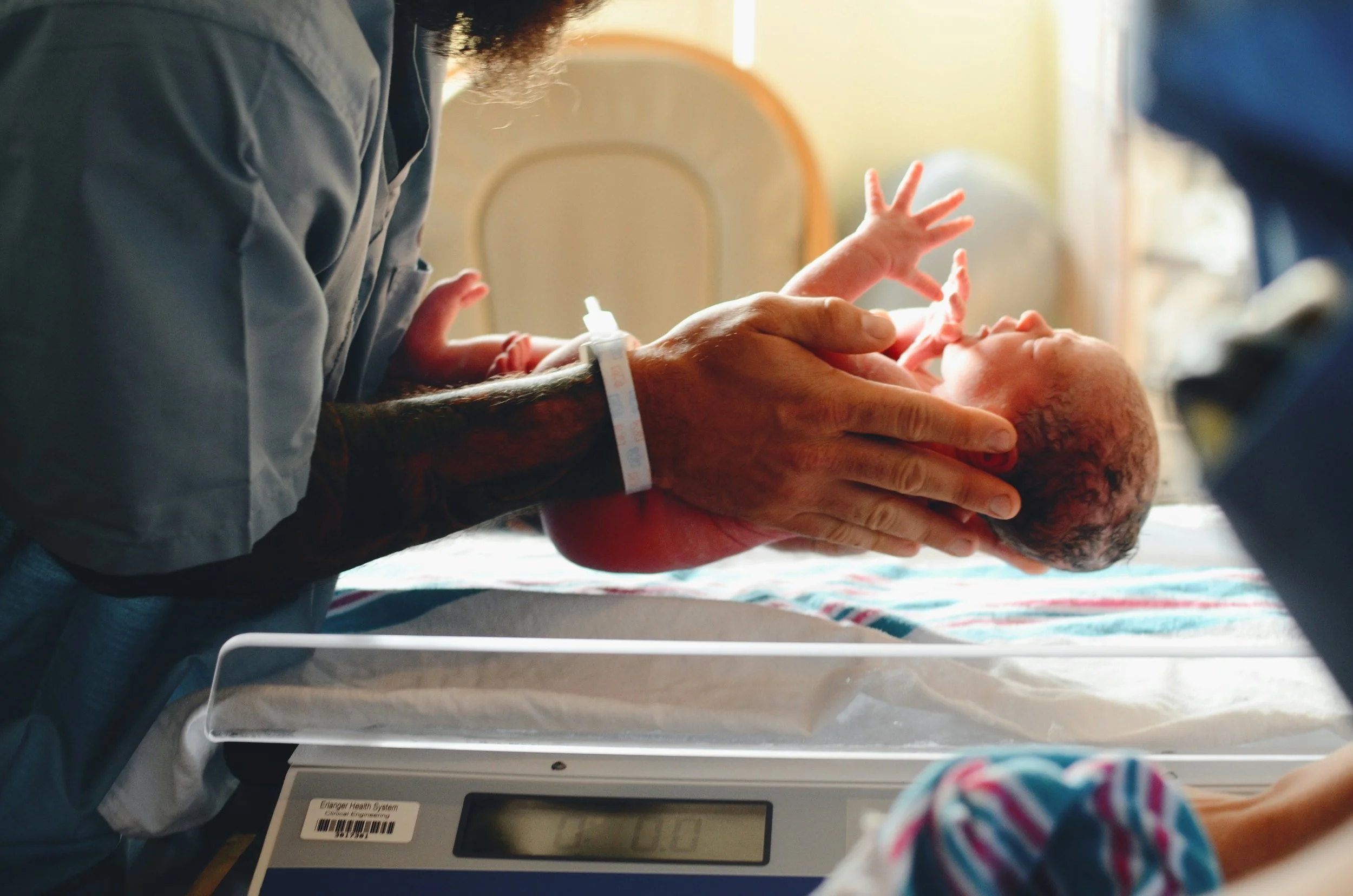
Photo by Christian Bowen on Unsplash
Birth is more a jolt than a gentle entrance. We don’t often think of our coming into the world that way. But according to one pediatrician, “There is no time in life, not even the moment of death, that can compare to the human body’s transformation in the first five minutes outside the womb.” We join the world disoriented, gasping, stunned by sound and light and air. We face the glare of a bright-lit entry. A doctor snips a connecting cord.
This is the threshold God crossed to be with us when born into our midst. God becoming human entailed a real birth, with the joy and drama. The babe cried out, as Frederick Buechner put it, “as each one of us cried out, at the shock and strangeness of being born into the darkness of the world.” We enter life amid the drama of a blessed trauma.
When I entered the world, I opened my tender and swollen eyes that sweltering Phoenix morning at 8:39, needing to come to terms with a world I knew nothing about. I somehow managed to breathe, even though until that moment my mom had done all the breathing for me. A mercy. I now joined a new world outside the warm amniotic universe. Cupped hands must have reached out to catch me. Another mercy. I was wanted and welcomed.
And I was, so to speak, all eyes. For once emerged, before long an infant will enter a stage called “quiet alert.” The young irises can focus only within a range of a foot or so, but still they scan for a face. They search for a set of eyes: Where’s Mom? Some kind face?
What habit of ours better conveys our relational bent? I lapse into such moments now, when I’m not too rushed, looking lovingly and longingly at the faces of people in my life now. I can begin, just possibly, to imagine how I would have then, too, as a newborn. And when the infant’s eyes meet another’s, especially eyes that return the gaze, they rivet their eyes to that face. They relate. Connect.
I like to think of Advent, this season of watchful waiting, as a time of quiet alert. We stay on the lookout for new mercies. Even amid the jarring moments. Even if we’ve had to undergo the jolts life sometimes brings.
As adults now, we keep up the looking. For in the divine birth we see how someone comes close, right where we live. God comes to connect with us, capture our attention. We senses layers of meaning we might easily miss, were we not to keep watching. As my friend Kathy says, we find that in the unfolding discoveries the church made about the Incarnation, “here is a story that takes seriously every category of human experience.” We recognize mercies even in birth, our barest, most fundamental beginnings. And through all that follows.
This picture of what God does to get and hold our gaze helps us remember that we were made with a transcendent care and love—especially in a world that tries to wear down our humanity, distract us from our truer longings, or reduce us to nothing more than consumer data on a spreadsheet.
If God fundamentally loves us, though, everything we ever face becomes more endurable, imbued with hints of meaning waiting to be discovered. It’s more hopeful. Less lonely. For here we see a living God—loving, not distant or stand-offish, born right into the thick of everything human—smack in the middle of what can turn out to be inhumane—life’s best and worst. Immanuel: God with us, everywhere.
That’s worth paying all kinds of attention to. I’m praying that God will make me more alert this season, more expectant for all he wants to do in and through Jesus’ raw, inauspicious coming. I hope to see more of all that can happen through his entry into the world, his drawing near to my world. God willing, I’d like to keep watching, my gaze not so easily pulled away.
To see more of my writing or for ongoing news about my forthcoming book, visit my website, http://revtimothyjones.com. NOTE: This essay draws heavily on a previous Substack post I decided to revise and post here.